

An academic Chair of Intelligent mobility and Territorial Dynamics
Today, sustainable and intelligent (or “smart”) multi-scale mobility is one of the aspects of the city of the future. The “Intelligent Mobility and Territorial Dynamics” (MIDT) so-called Chair of excellence aims to provide answers to this new challenge of the 21st century, in direct collaboration with the many stakeholders involved (local authorities, companies, regional and international partners, SU (the Sorbonne Universities cluster) partners, etc.).
Context
Chair holders: Christina Pronello (UTC, laboratoire Avenues), Gilles Morel (UTC, laboratoire Avenues)
Dates: 2015–2020
In partnership with: Conseil régional des Hauts-de-France, Cerema, UPJV, ESIEE
The issue of transportation and mobility is becoming increasingly important in the logic pf regional economic development. Urban planning and regional development appear to be increasingly linked to a diversified and flexible evolution of transport and logistics services. These services are a determining factor in the attractiveness of regions and their economic competitiveness.
The solutions that decision-makers and experts must devise together, in consultation with users, must evolve not only in terms of infrastructure and vehicles, but also in terms of a coherent organization of the various modes of transport to make the system as a whole more efficient. The aim is to move towards truly integrated intelligent transport systems capable of responding to diverse needs in real time, while also saving energy and reducing pollution in a sustainable manner.
To support these developments, both in the planning and operational management phases, digital technologies are being called upon to support new intelligent systems capable of simulating and optimizing new multimodal networks, responding in real time to on-demand transport, and making networks technically and economically interoperable.
On the other hand, regional cities, but also smaller urban areas, are becoming the main hubs around which the territory is organised, and economic development can be seen, defining a new, less static and more dynamic map of the territory. This new space, which integrates mobility, must be approached at different scales on a systemic basis, from the very local level (neighbourhood, campus, port, etc.) to the national and even international levels, including the urban and regional levels.
One of the major challenges for research is to provide decision-makers with tools to better manage this complexity of flow management, both in terms of time (from short-term and real-time regulation to forward-looking scenarios for the future) and in terms of space (different geographical and administrative scales) but also according to multimodal (how to integrate different modes) and multi-criteria (how to take impacts into account from the early stages of scenario analysis) approach.
In addition, regions and urban communities have acquired sufficient autonomy to implement a realistic and viable transportation policy consistent with their territorial and economic development strategies and coordinated with (and compliant with) national and European policies.
This comprehensive and systemic approach must also take into account, in order to assist decision-making and select the best scenarios for the future, the paradigms of sustainable development and resilience: reducing the use of fossil fuels to limit local pollution and the impact on climate change, improving the resilience of networks to natural and technological hazards, and improving mobility provision to meet societal and economic demand.
Regional strategy
Position in the regional strategy
This research chair is part of axis 3.2 “Mobility and urbanity” of the Hauts-de-France Region's “smart specialization strategy.”
It not only aims to strengthen the Region's scientific standing, but also aims in the long term to develop innovative and operational expertise in the field of sustainable and “smart”, multimodal, and multi-scale mobility.
Mobility refers primarily to the movement of people, with the aim of developing different modes of transport and networks in a coordinated and optimized manner to better meet demand and thus contribute to the region's attractiveness.
This attractiveness also concerns businesses and the economic fabric. Indeed, this same systemic and intermodal approach can also be applied to freight and therefore to the challenges of the logistics chain. The Hauts-de-France region has many assets to strengthen a network combining different modes of freight (road, waterways with the future Seine-Nord canal, SNCF train stations, etc.), and thus better meet the needs of local economic development in a context where a global approach is required.
By becoming a “living lab” for smart mobility, the Hauts-de-France region could strengthen its national and international scientific influence by positioning itself as a “bridgehead” for research and as a cluster enabling researchers and professionals from around the world to come, present and compare their work and field experiences on these issues.
Structuring effect in the region
The theme of smart mobility will be addressed from the perspective of a regional meshed network that will have a structuring effect on local authorities and the scientific community in Hauts-de-France and, to the south, Greater Paris. This network will include an experimental component (living labs) and a scientific and academic component.
Urban and territorial living labs will enable scientific and technological innovations integrating transport, digital technology, energy, and urban planning to be tested. They will be rolled out across the urban area and its ecosystem, but also at regional level by developing the concept of “connected territories,” improving links between regional cities (Amiens, Compiègne, Beauvais, etc.).
This multidisciplinary program will also make it possible to mobilize academic and research players in the Hauts-de-France region by creating new synergies between laboratories working in the fields of digital technology (UTC/Heudiasyc in Compiègne, UPJV/MIS at Amiens), transportation and mobility (Cerema/DTecMEF and UTC/GSU in Compiègne), energy (UTC-Roberval in Compiègne, ESIEE at Amiens, partners of the RTI-Lille consortium).
Regional projects and living labs will contribute to a systemic vision of the region and mobility, shared between research scientists and engineers and regional leaders. They will incorporate several complementary perspectives and issues, such as:
- Regional connectivity (railway stations, roads, and new public transportation services).
- Multimodal transportation, to make the most of the potential of existing systems (multimodal transportation hubs).
- Urban planning to improve quality of life (park-and-ride facilities, cycle paths, intermodal hubs for soft modes of transport/public transport).
- Logistics for economic development (logistics platforms, multimodal freight services, urban logistics).
- Accessibility in general and accessibility to sensitive and strategic sites in particular.
Scientific environment
The Avenues (EA 7284), research team, in association with the UTC's department on Urban system engineering, is conducting multidisciplinary research on the major challenges facing the sustainable and smart cities of the future. The development and planning of urbanized areas are approached from a global and systemic perspective, integrating issues of mobility, energy transition, and the environmental impacts of projects (local pollution, climate impact, etc.), without forgetting the societal component and the users' point of view.
The Avenues team is developing models, methods and tools to help local decision-makers design, assess and compare future scenarios for urban and regional planning using a multi-criteria approach. Territorial networking, modelling, simulation, and flow monitoring are based on the development of digital technologies and tools that will enable data to be acquired, analysed, and processed at different territorial scales for diagnostic and decision-making purposes.
The interconnection and optimized management of networks, particularly transport and energy networks, require digital connections and a move towards “smart grids” (the concept of intelligent network coverage that can be applied to energy, transport, water management, waste management, etc.). The convergence of smart networks applied jointly to transport and energy raises questions about how to optimize the coupling between electrical energy—partly produced by renewable energies—and electric vehicles.
The issue of social and societal acceptability is also taken into account in this comprehensive approach, through user participation from the early stages of project definition and the assessment of needs tailored to different profiles. The issue of the shift towards multimodal mobility and intelligent management of supply and demand is addressed at various levels: the dedicated site, the urban area, the region, and the integration of the region into national and European networks. The Avenues team is developing this theme through a scientific approach based on cross-disciplinary perspectives, but also through an experimental and operational approach that is being implemented through the creation of urban “living labs”. Issues such as the interoperability of transport networks, accessibility on dedicated sites, the development of a multimodal offer integrating soft modes, and the introduction of new modes of transport (autonomous vehicles, electric vehicles) are currently being studied in the city of Rio de Janeiro and on the campus of its (Federal Universty (UFRJ). Other sites are currently being studied in the Hauts-de-France region and Greater Paris, in collaboration with major national transport players.
The Avenues team will also soon welcome the national Club "Day-to-day Mobility Courante", to its campus premises, in partnership with the association "Oise Mobilité", which will bring together the majority of transport and mobility professionals with the aim of enabling them to work together and with teams of researchers on new modes of travel and transport.
The “Intelligent Mobility and Territorial Dynamics” (MIDT) chair is part of a strong commitment to consistency between training (in urban systems engineering) and research (in urban and territorial modelling combining mobility, energy efficiency and sustainable development) and adds value to the current expertise of UTC and the Region on the theme of “Mobility and Urbanity.”
Contacts de la recherche à l'UTC
Concilier ses deux passions : l’ingénierie et l’événementiel
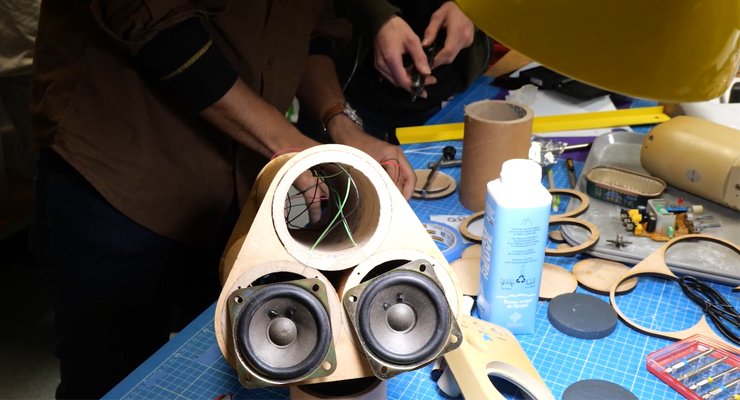
L’optimisation et l’upcycling des produits, credo des API
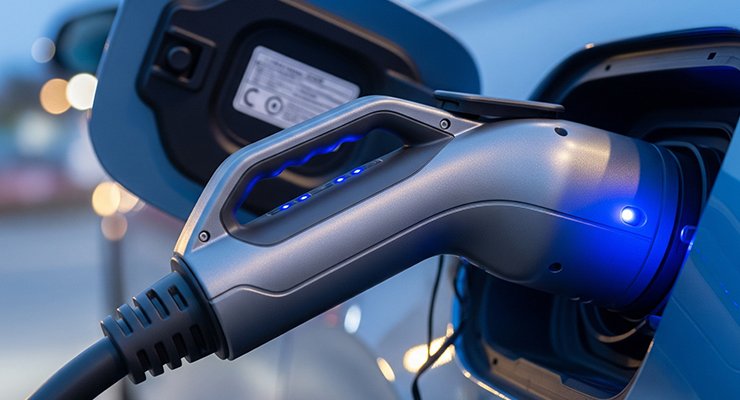
Accélérer l’innovation en matière d’électromobilité